
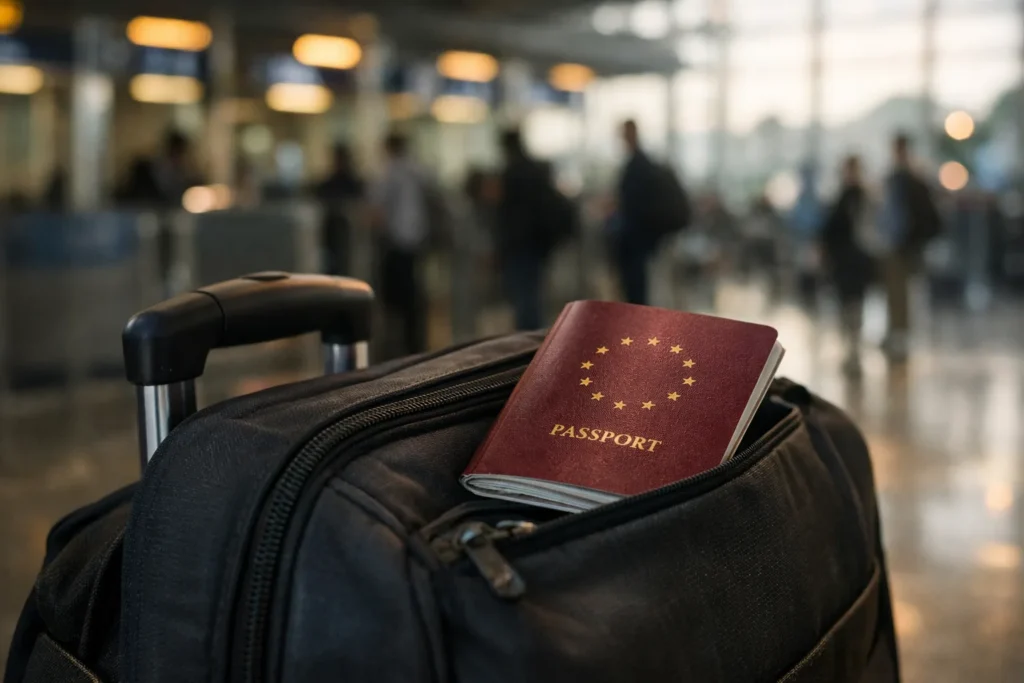
Thailand visa-free stay rules will limit EU passport holders to 30 days from 15 September, halving their current 60-day allowance. The wider reduction covers tourists from more than 60 countries and territories and comes amid concern over crimes and unauthorised businesses involving some foreign nationals.
Thailand visa-free stay changes also benefit three countries
Passport holders from Peru, Brazil and South Korea will gain 90 days without a visa from 15 September, up from 60 days.
The existing exemption system spans more than 90 countries, including the 29 members of the Schengen Area. Thailand’s foreign ministry has not yet decided the position of travellers from around 20 other countries.
Those unresolved cases mean the revised rules will not affect every currently exempt nationality in the same way. Travellers need to check the position attached to the passport they intend to use, rather than assuming one policy applies to the entire exemption list.
Visitors can still request an extension
A visitor admitted without a visa may request one extension, but approval rests with an immigration officer.
This option can help some people who want to remain beyond their initial permission. However, travellers should not build a fixed itinerary around an extension that has not been approved.
The longer-stay visa alternative
The Destination Thailand Visa permits stays of up to 180 days per entry. Holders can seek an additional extension of up to 180 days.
Applicants must show that they hold at least 500,000 baht (€13,000) in a bank account. Remote workers must also provide evidence of employment outside Thailand.
The visa therefore offers substantially more time than admission under the exemption scheme, but it carries financial and documentary requirements that do not apply to a standard short holiday.
Arrests involving foreign nationals form the policy backdrop
Recent cases have involved foreign nationals accused of drug offences, sex trafficking and running businesses without the required permits.
Those business cases have included hotels and schools. The high-profile arrests accompanied the review of how long visitors should be allowed to remain without applying for a visa.
Thailand is balancing those concerns against tourism’s economic importance. The industry accounts for more than 10% of the country’s gross domestic product.
The country has welcomed nearly 21 million foreign visitors since the start of 2026, a fall of 3% from the same period last year. Visitor numbers have also yet to return to their pre-pandemic level.
What travellers should do before booking
Travellers should match their trip length to the confirmed allowance for their passport before committing to accommodation or transport beyond that period.
- Build the itinerary around the permission available on arrival, not a possible discretionary extension.
- Compare the ordinary extension route with the Destination Thailand Visa before making non-refundable arrangements for a longer trip.
- Prepare the required bank and employment evidence before applying for the longer-stay visa.
- If a nationality remains in the undecided group, wait for the foreign ministry’s ruling rather than assuming the existing allowance will continue.
Anyone travelling around the changeover should verify the latest consular position before departure. The practical effect depends on nationality, intended length of stay and whether the traveller qualifies for a visa instead of visa-free admission.